


Introduction
Well, if you have read my previous two articles on the Sony 12-24 F4 G and Sony 24-105 F4 G OSS, you can probably tell by now that I’m a big fan of compact-ish zoom lenses.
The Sony FE 70-200mm F4 Macro G OSS Ⅱ was the third lens I purchased for the Sony E-Mount. I was looking for a (relatively) compact telephoto zoom lens to complement my previous two purchases and thus create what I consider Sony’s F4 Holy Trinity.
Disclaimer: Like many, when making a purchasing decision, I have gone down the rabbit hole of MTF charts, subreddits and YouTube reviews.
Here I try to steer away from all those technical specifications as there are already an abundance of great resources to choose from. Instead, I have hand picked a selection of images I’ve captured during my photo walks which I feel capture what this lens is capable of out in the field.
All images shared in this review were photographed using the Sony A7iii in Uncompressed RAW format with minimal retouches in Adobe Camera Raw.
The Macro Factor
What makes this lens a unique and compelling proposition is its ability to double as a macro lens. It offers a minimum focusing distance of just 0.26m (0.85 ft for those still using the imperial system), which gives a 0.5x magnification, 1:1 magnification can be achieved with the addition of Sony’s 2x Teleconverter for true to life reproduction.
Rendering
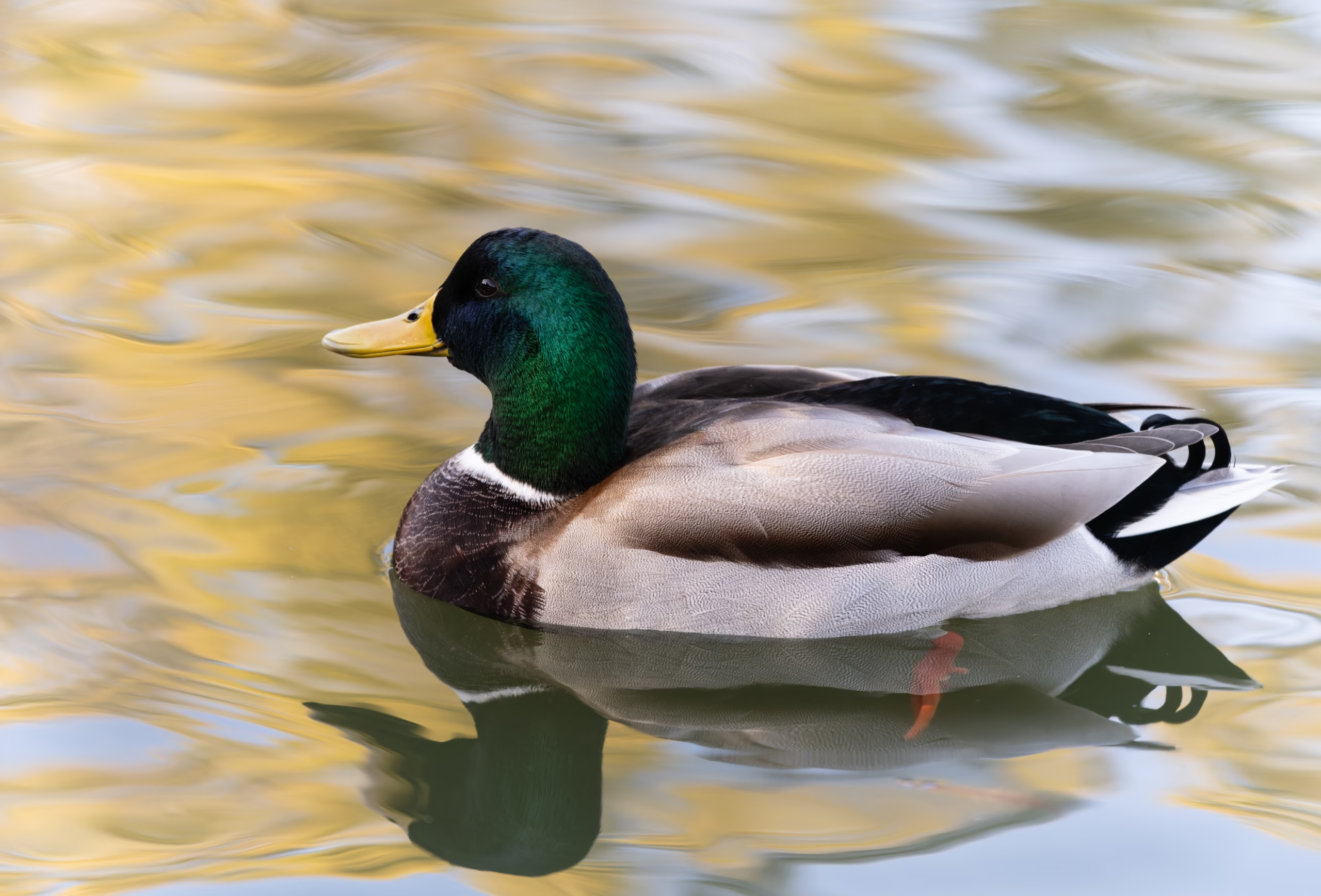
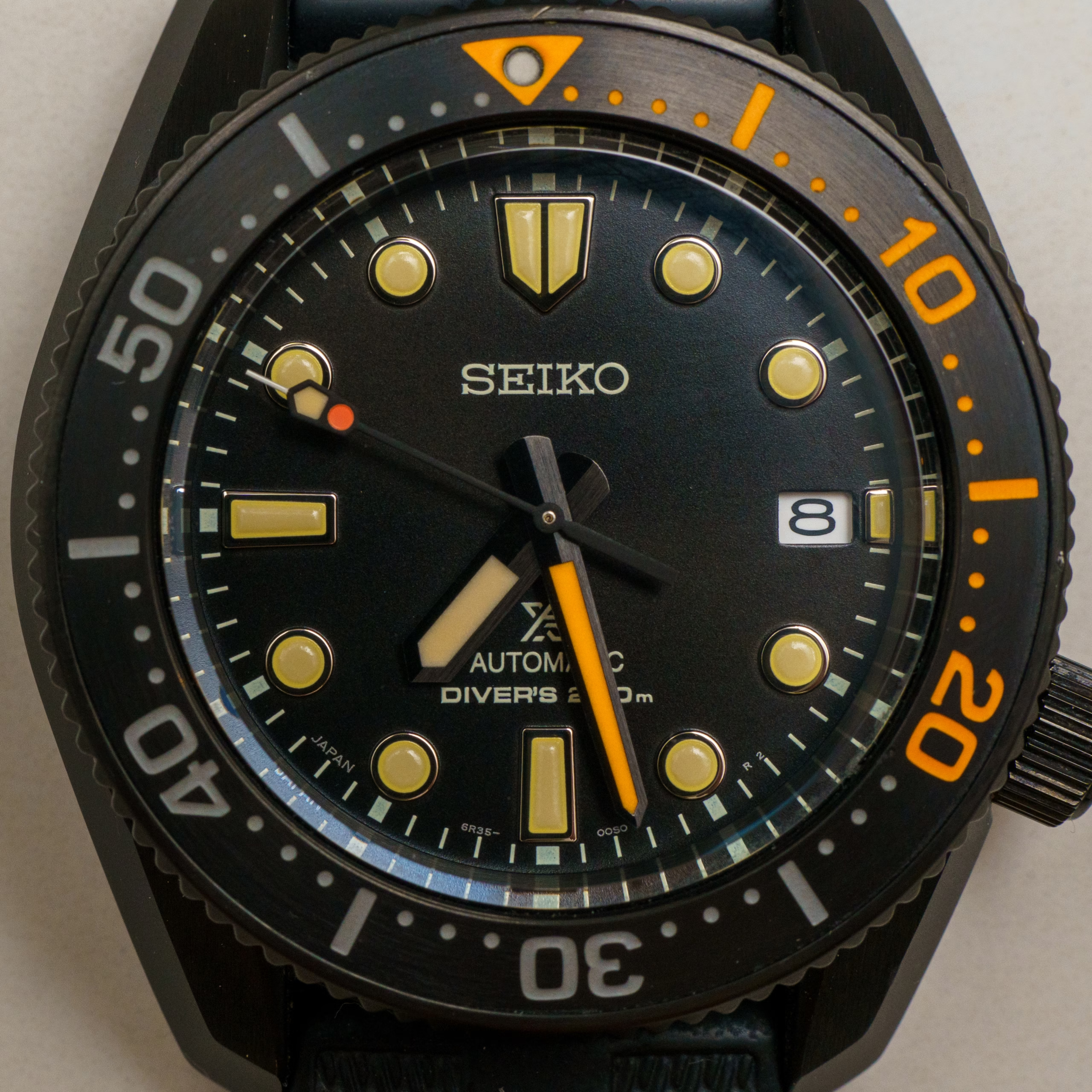
This lens is tack sharp and will please the most demanding pixel-peepers. Wide open it’s able to produce more than adequate background separation, and when using the lens for macro photography, you’ll likely be stopping down the aperture even further as the depth of field is already razor thin at F4. Not much else to add here.

Alternatives
As of today, foregoing the first generation F4 G/F2.8 GM lenses, there are two main E-Mount alternatives available to choose from:
- Sigma 70-200mm F2.8 DG DN OS Sports
- Sony FE 70-200mm F2.8 GM II (SEL70200GM2)
The Sigma is a genuine alternative, but it’s not without compromises. Sony’s 1.4x and 2x teleconverters are not supported and continuous burst shooting speeds are also limited. This may be a deal breaker for sports and wildlife photographers. Both alternatives do not offer macro capability which really positions this lens as the most versatile of the bunch.

Closing Thoughts
This lens is the crown jewel in the F4 Holy Trinity. Of course, being the most modern and versatile, it makes sense. Sure, you’re losing one stop of light compared to the alternatives, but for me the benefits far outweigh this (and perhaps the only) drawback.
Until next time,
Alex